You park for the night, open the laptop, and Starlink Mini reboots. Again. You’re running it off your van’s 12V system through a converter and something in that chain isn’t holding. It’s one of the most common van life complaints once people get Starlink Mini — the hardware works great, the power setup doesn’t.
This guide covers what Starlink Mini actually needs from a power source, why 12V van setups create problems, and how to build a setup that works reliably without carrying a generator.
How Much Power Does Starlink Mini Actually Use?
Starlink Mini draws 25–40W during active use. In most conditions, that’s closer to 30W. Push it hard — heavy downloads, weak signal forcing more transmission power — and it can hit 40W. Startup briefly spikes to around 60W.
Compare that to the standard Starlink: 50–75W in regular use. The Mini is roughly half the power draw, which is exactly why van lifers and overlanders have adopted it.
For a practical daily budget: running Starlink Mini 8–10 hours a day puts you at around 300–400Wh of consumption. That’s manageable with the right setup — but it’s more than a small portable power bank handles.
Why Powering It from Your Van’s 12V System Gets Complicated
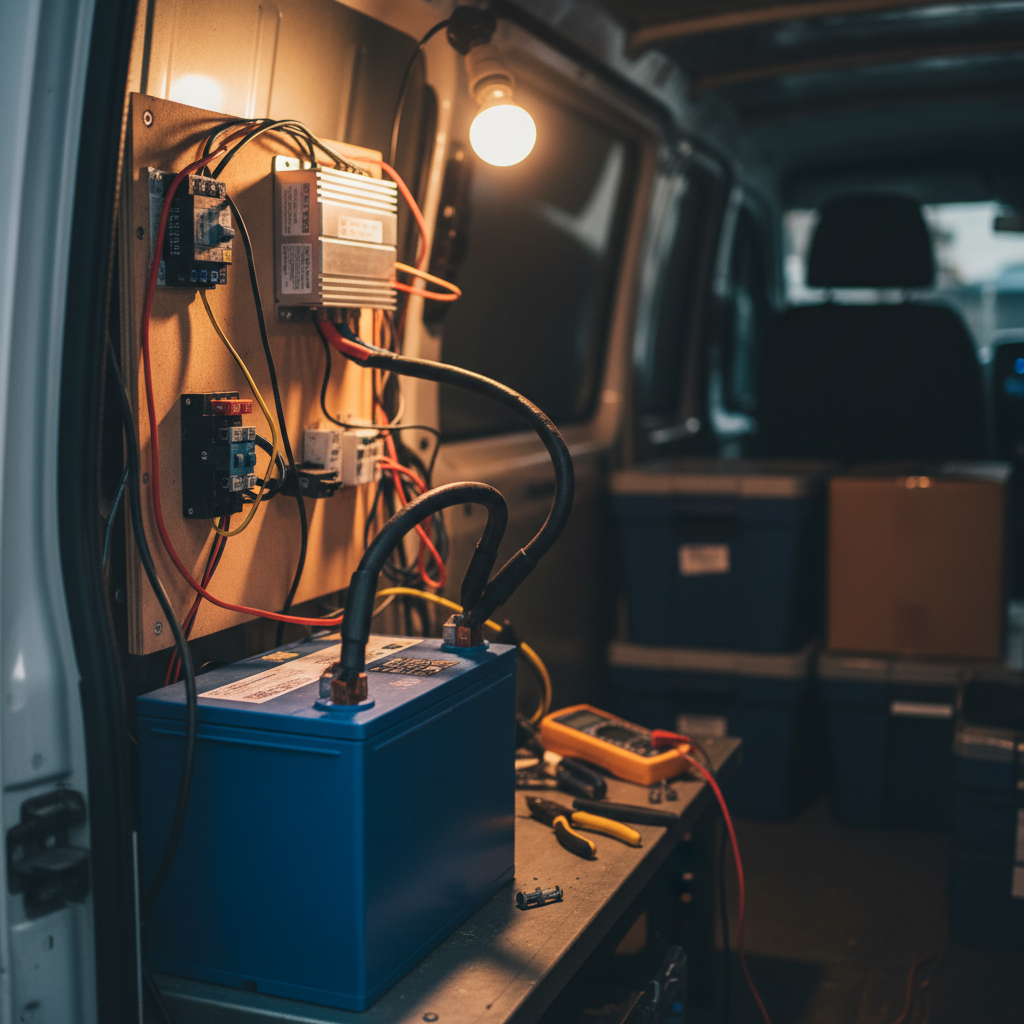
Most vans run a 12V house battery system. Starlink Mini’s power supply needs more than 12V DC to operate correctly — which is why running it directly off your van battery requires a DC step-up converter, typically targeting 24–30V output.
That works, but it adds failure points. Long cable runs from the battery to where the dish sits are common in van builds, and voltage drop over distance is real: undersized wiring or a long run can sag your source voltage under load, giving the converter less headroom to work with. In cold conditions, battery voltage sags further.
The result is what van lifers report constantly: Starlink Mini reboots randomly, especially at night or in cold weather. Heavy-gauge wiring and a quality converter fix most of it — but it’s more complexity than most people expect when they buy the hardware.
Three Ways to Power Starlink Mini Off-Grid in a Van
Option 1: Direct from 12V via DC Step-Up Converter
How it works: Wire a step-up converter between your house battery and Starlink Mini, boosting to the voltage it needs.
Pros: Uses existing van battery capacity. If you have a large lithium house bank, runtime is essentially unlimited.
Cons: Requires correct wiring (heavy gauge, short runs where possible), a quality converter, and some troubleshooting to eliminate reboots. Not plug-and-play.
Best for: Van lifers with an established electrical system who want to integrate Starlink Mini into it permanently.
Option 2: General-Purpose Portable Power Station
How it works: Use a large portable power station (300–1000Wh+) as an intermediary. Most output 110V AC, which Starlink Mini’s power brick handles.
Pros: Simple setup, can charge from solar or shore power, powers other devices too.
Cons: AC-to-DC conversion loses 10–15% efficiency. Power stations in the 1000Wh range are heavy (20+ lbs). Overkill if Starlink Mini is your primary load.
Best for: Van lifers who already own a large power station and want to add Starlink Mini without a dedicated setup.
Option 3: Purpose-Built Starlink Mini Battery (Direct Voltage Match)
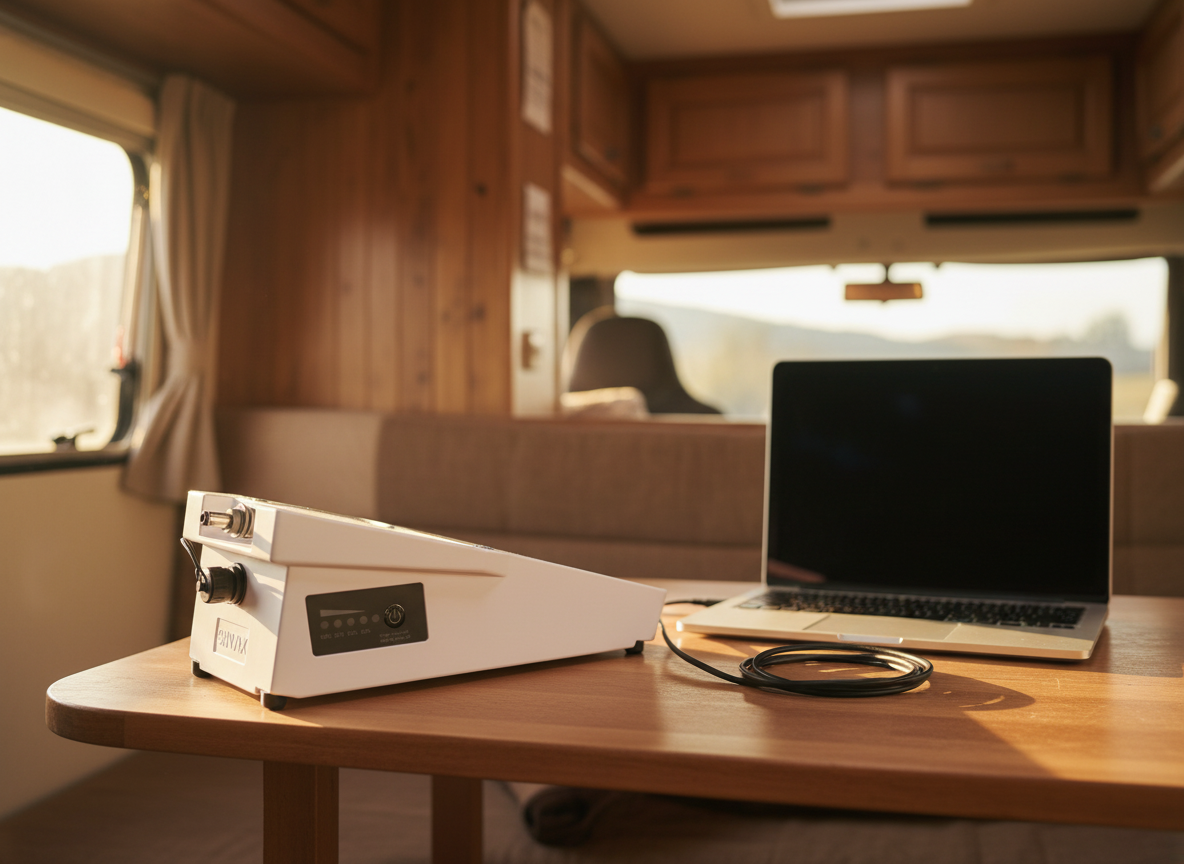
How it works: A SINVYX battery outputs 15–21V directly — the same voltage range Starlink Mini accepts. Plug in, done. No converter, no AC brick, no conversion loss.
Pros: Clean direct connection, IP65 rated for outdoor use, solar input built in. Lighter and more portable than a full power station.
Cons: Smaller capacity than a full house bank or large power station. Designed for portable use, not as a permanent whole-van power system.
Best for: Van lifers who want a reliable, self-contained Starlink Mini power source that works anywhere — parked, at camp, or off the beaten path.
What “Purpose-Built” Actually Means for Van Life
General-purpose power banks output 5V (USB) or 12V DC. Neither matches what Starlink Mini needs directly. Running it through those options means adding adapters and conversion steps — each one losing efficiency and adding a potential failure point.
SINVYX outputs 15–21V, which sits right in Starlink Mini’s accepted input range. One cable. The power that leaves the battery reaches the dish with minimal loss.
For van life specifically, this also means you’re not dependent on your van’s electrical system being fully sorted. The SINVYX battery works whether your van is running or parked, whether you’re at a trailhead or on a ferry.
Solar + SINVYX: The Setup That Runs Indefinitely
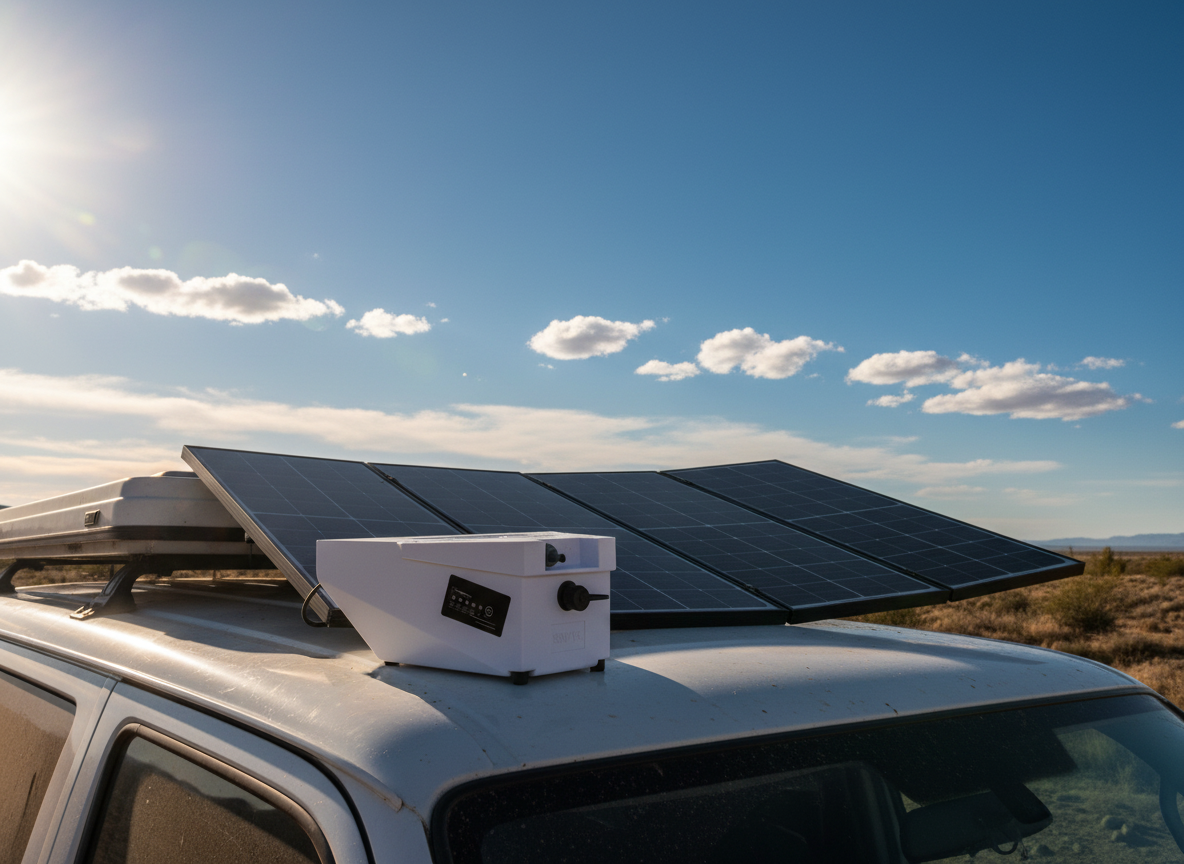
SINVYX accepts solar input up to 100W at 20–40V PV. Pair it with a compatible folding solar panel and you get a closed loop: the panel charges the battery during daylight, the battery runs Starlink Mini through the evening and overnight.
Recharge times with the solar input:
- 60W panel in good sunlight: 180Wh recharged in roughly 3–4 hours
- 80–100W panel: cuts that to 2–3 hours
In practice, van lifers with a 60–100W folding panel can sustain all-day Starlink Mini use across multiple days without plugging into shore power — as long as they’re getting a few hours of useful sun.
One thing to plan for in cold weather: below 0°C, the BMS cuts off charging to protect the cells (discharge still works down to -20°C). In winter conditions, plan your charging window for midday when temps are highest.
Which SINVYX Capacity Do Van Lifers Actually Need?
Van life use rarely involves flying with the battery. The airline restrictions that limit the 99Wh and 158Wh models to carry-on don’t apply when you’re driving. That opens up the 180Wh and 200Wh — the models built for extended ground use. (Need a full side-by-side of all four? See the complete battery comparison guide.)
| Model | Runtime | Weight | Solar Input | Best for |
|---|---|---|---|---|
| [180Wh](https://lifepo4powers.com/shop/180wh-starlink-mini-battery/) | 6–9 hr | 2.42 lb / 1.1 kg | ≤100W, 20–40V PV | All-day van life use, paired with solar |
| [200Wh](https://lifepo4powers.com/shop/200wh-starlink-mini-battery/) | 7–10 hr | 2.42 lb / 1.1 kg | ≤100W, 20–40V PV | Maximum runtime, heavy-use days, backup buffer |
180Wh is the practical choice for most van lifers. Six to nine hours covers a full day of use, and solar recharge closes the loop. At 2.42 lbs, it stows easily anywhere in the van.
200Wh adds roughly one more hour of runtime at the same weight and footprint. Worth considering if you regularly push Starlink Mini hard — lots of video calls, weak signal areas — or want more buffer before solar kicks in each morning.
Both models share the same IP65 rating (dustproof and water-resistant to direct spray) and -20°C to 60°C operating range. Rain, trail dust, and temperature swings don’t affect performance.
FAQ
Can I charge the SINVYX battery from my van’s alternator while driving?
The SINVYX solar input accepts 20–40V PV, not a standard 12V alternator feed. The supported charging methods are the included AC charger (at campsites or with a shore power hookup) and a compatible solar panel. For charging from the alternator, you’d need additional equipment to step the voltage up to the solar input range.
What if I need Starlink Mini running 24/7 — like for remote work?
A single battery won’t sustain it alone. The 200Wh gives you 7–10 hours; you’d need to recharge overnight or during low-demand windows. For true round-the-clock use, combine a SINVYX battery with a solar panel for daytime recharge and either a second battery or periodic shore power to cover gaps.
Does the SINVYX battery handle extreme heat — like a van parked in the desert?
The working temperature range is -20°C to 60°C. The BMS has a discharge cutoff at 60°C, which is above the temperature a van interior would safely sustain in any case. Store it in a ventilated spot out of direct sun and it handles desert conditions without issue.
How is SINVYX different from a Jackery or EcoFlow for this use case?
Jackery and EcoFlow are general-purpose power stations designed to run everything from laptops to coffee makers. They output AC (and sometimes DC at multiple voltages) to cover that range. For powering Starlink Mini specifically, you’re paying for capability you won’t use and accepting conversion losses along the way. SINVYX is built for one job — powering Starlink Mini directly at 15–21V — with a form factor sized to that use case.
Can I run other devices from the SINVYX battery?
The 15–21V output is matched to Starlink Mini, not to general USB devices or 12V accessories. For everything else in the van, your house electrical system handles it. SINVYX handles Starlink Mini.
Have a specific van setup in mind? We can help figure out which model fits your layout and usage pattern — just reach out.